Scroll through Ecom Brands in Amazon, Etsy, Instagram ads, or random Shopify stores for five minutes and you’ll notice something uncomfortable:
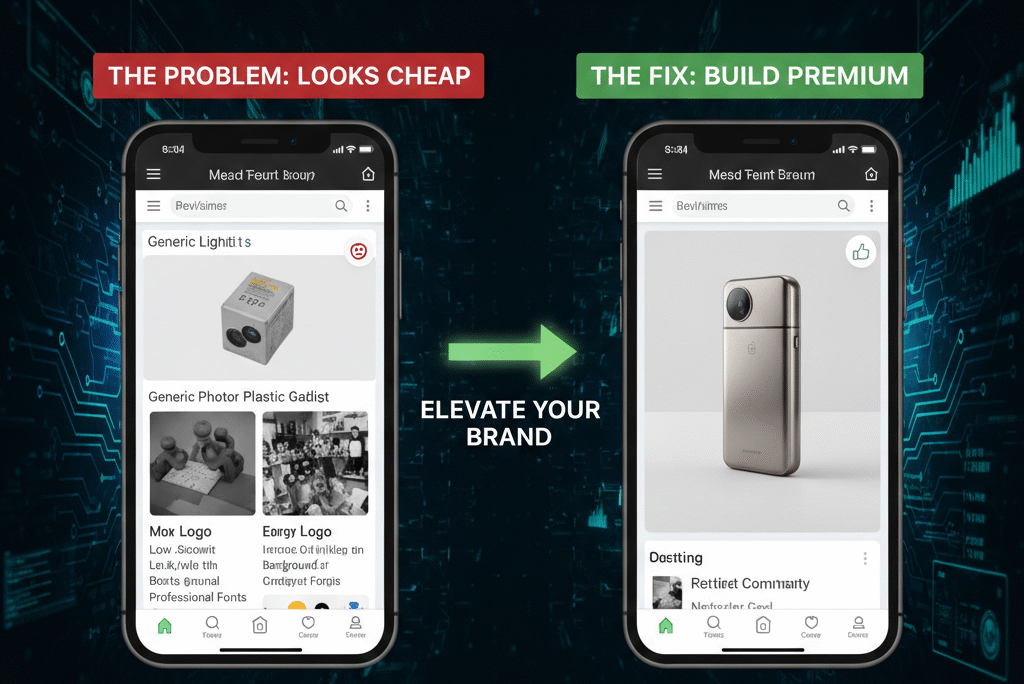
Most ecommerce brands look cheap… even when the product isn’t.
Same tired logo fonts. Generic product photos. Loud colors fighting for attention. Packaging that screams “factory default.” Websites that feel like they were assembled in a hurry at 2 a.m. after watching half a YouTube tutorial.
Here’s the twist: customers notice this instantly. Not consciously, not analytically—but emotionally. And emotion decides purchases long before logic shows up with a spreadsheet.
Let’s unpack why this happens, what “cheap” actually means in branding terms, and how real ecommerce brands fix it without burning money or pretending to be something they’re not.
“Cheap” Isn’t About Price — It’s About Trust
This is the first mental reset most sellers need.
A cheap-looking brand doesn’t mean:
- Low price
- Small business
- New brand
- Unknown brand
It means the brand signals low confidence, low clarity, and low intention.
Humans are pattern-recognition machines. We subconsciously ask:
- Does this brand know who it is?
- Does it feel intentional?
- Does it feel safe to buy from?
- Will I regret this purchase?
If the visual answers to those questions are shaky, the brain hits pause—even if the product specs look good.
That pause kills conversions.
The Real Reasons Most Ecom Brands Look Cheap
Let’s get brutally honest. These are the big offenders.
1. No Clear Brand Identity (Just Vibes)
Most ecommerce brands don’t actually have a brand. They have:
- A logo file
- A color they like
- A font they found on Canva
That’s not a brand. That’s decoration.
A real brand identity answers:
- Who is this for?
- What problem do we solve?
- Are we premium, practical, fun, serious, minimal, bold?
- Why should someone trust us over the identical product next door?
When these answers are missing, everything looks random. Random feels cheap.
Fixing this isn’t about being fancy—it’s about being coherent.
2. Logos That Try Too Hard (or Not at All)
Cheap logos fall into two camps:
- Overdesigned: gradients, shadows, symbols doing gymnastics
- Underdesigned: default fonts slapped next to an icon
Strong ecommerce logos are usually boring in the best way. Simple. Legible. Memorable. Flexible.
Your logo isn’t supposed to explain your entire brand story. It’s supposed to anchor recognition.
If your logo only looks good on a white background at one size, it’s hurting you.
3. Inconsistent Visuals Everywhere
This is a massive trust killer.
Product images look one way.
Instagram looks different.
Website fonts change every page.
Packaging feels like a different company entirely.
Customers don’t think “inconsistent branding.”
They think: something feels off.
Consistency signals professionalism. Professionalism signals reliability. Reliability signals safety.
Cheap brands look like five people made five decisions with no shared plan.
4. Stock Photos and Lazy Product Images
Your product photos are doing more selling than your copy ever will.
Common mistakes:
- Harsh lighting
- Busy backgrounds
- Inconsistent angles
- Over-edited images
- Generic lifestyle photos that scream “stock”
Customers are insanely good at spotting fake lifestyle imagery. When they do, belief collapses.
Good product photos don’t need to be cinematic. They need to be:
- Clear
- Honest
- Consistent
- Purpose-driven
Clarity beats flash every time.
5. Packaging That Looks Like an Afterthought
Packaging is your brand’s handshake.
Cheap brands treat packaging like a shipping requirement. Strong brands treat it like part of the experience.
Bad packaging says:
- “We just wanted to get this out the door”
- “This product could be from anyone”
- “Don’t expect much”
Good packaging says:
- “This was designed”
- “We care how this feels”
- “You made a good choice”
And no, this doesn’t mean expensive boxes. It means intentional design.
6. Websites That Feel Rushed or Cluttered
Your website is your digital storefront. If it looks messy, confusing, or outdated, customers assume the business is too.
Cheap websites usually have:
- Too many fonts
- Too many colors
- Too many popups
- Weak hierarchy
- Confusing navigation
- Walls of text nobody reads
The best ecommerce sites feel calm. Calm equals confidence.
If your site feels desperate, customers feel nervous.
Why This Actually Hurts Sales (Not Just Aesthetics)
Here’s the uncomfortable truth:
A cheap-looking brand doesn’t just convert less—it attracts worse customers.
Low trust brands:
- Compete on price
- Attract refund-happy buyers
- Get fewer repeat customers
- Struggle with reviews
- Burn money on ads
Strong brands:
- Charge more
- Convert better
- Build loyalty
- Survive algorithm changes
- Become assets, not hustles
Branding isn’t decoration. It’s leverage.
How to Fix a Cheap-Looking Brand (The Right Way)
Now the good part. Fixing this doesn’t require redoing everything overnight.
Step 1: Decide What You’re Actually Building
Before design, before logos, before colors—decide this:
Are you building:
- A value brand?
- A premium brand?
- A practical everyday brand?
- A niche-focused specialist?
There’s no wrong answer. There is a wrong execution.
Trying to look premium while competing on price confuses people. Trying to look fun while selling serious tools feels fake.
Clarity first. Always.
Step 2: Build a Simple, Repeatable Brand System
A real brand system includes:
- One primary logo
- One secondary logo
- 2–3 core colors
- 1–2 fonts
- Image style guidelines
- Tone of voice rules
This makes everything easier. Decisions stop being emotional and start being intentional.
Consistency compounds trust.
Step 3: Upgrade Product Photography Strategically
You don’t need 50 images per product. You need the right ones.
Focus on:
- Clean hero image
- Clear feature breakdown
- Lifestyle context that feels real
- Close-ups that show quality
- Consistent lighting and angles
Better images increase conversion and reduce returns. That’s rare ROI magic.
Step 4: Simplify Your Website Ruthlessly
Remove clutter. Remove noise. Remove desperation.
Ask:
- Is it obvious what we sell?
- Is it obvious why it’s valuable?
- Is it obvious what to do next?
Whitespace isn’t empty—it’s confident.
Step 5: Treat Packaging as Brand Real Estate
Even a simple mailer can feel premium with:
- Clean typography
- Thoughtful spacing
- A small brand message
- Consistent colors
Packaging is one of the few moments where the customer physically interacts with your brand. Use it.
The Big Shift Most Sellers Miss
Here’s the mindset change that separates brands from products:
Products are replaceable.
Brands are remembered.
You can sell the same item as 1,000 other sellers.
But you cannot sell the same experience.
Cheap-looking brands focus on launching fast.
Strong brands focus on lasting longer.
Final Thought
If your ecommerce brand looks cheap, it’s not a personal failure. It’s usually a clarity problem, not a talent problem.
Most sellers rush to sell before they slow down to design trust.
Fix the fundamentals. Be intentional. Be consistent.
And suddenly, the same product starts converting like a different business.
Because in many ways, it is a different business.
If you’re serious about turning your ecommerce business into a real brand—not just another product listing—this is exactly where professional strategy, design, and execution matter. At EcomMate, we help ecommerce sellers build brands that look credible, convert consistently, and scale across Amazon, eBay, Etsy, and their own websites. If you’re ready to stop guessing and start building something intentional, explore our ecommerce services and see how we do it end to end.
When you zoom out and look at the bigger picture of ecommerce success, industry research supports what we’re saying here: strong brand identity isn’t just a “nice to have.” It’s a fundamental part of why customers choose one store over another. According to a detailed guide on ecommerce branding, brands that invest in a cohesive identity build trust and credibility with shoppers, stand out in saturated marketplaces, and can even increase the perceived value of their products—leading to better conversions and long-term loyalty.