Walk into a grocery store half asleep and grab a Coke instead of a random red can. Order the same sneakers again without checking reviews. Rebuy skincare you already trust without hunting for alternatives. None of that is logical shopping behavior in the strict, spreadsheet sense. It’s branding doing quiet, invisible work in your brain.
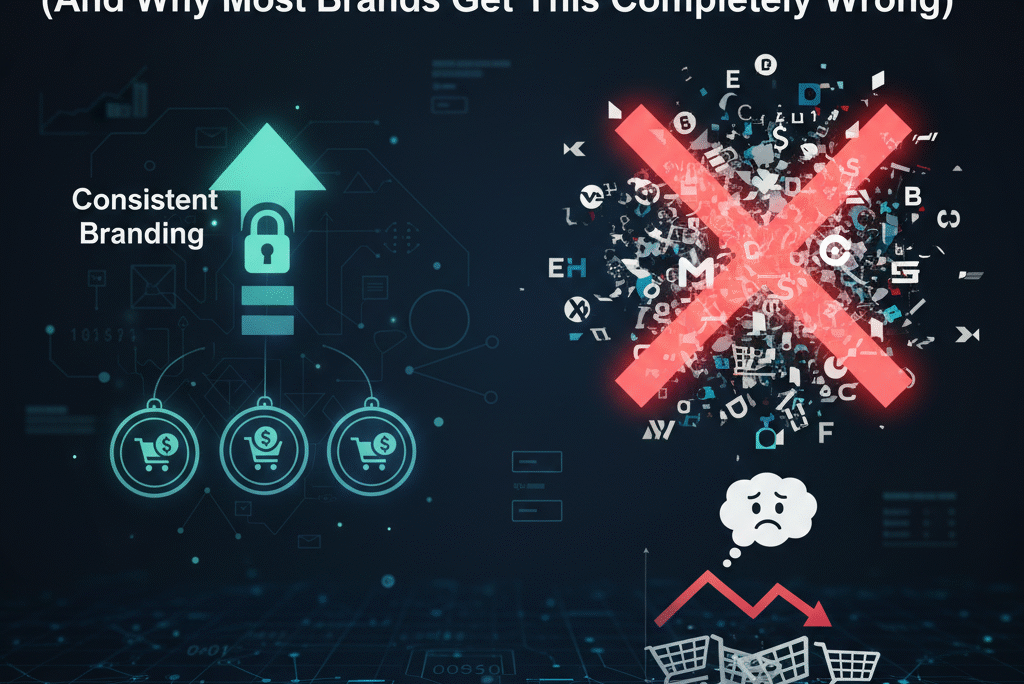
Repeat purchases aren’t driven by discounts or clever ad copy nearly as much as people think. They’re driven by familiarity, trust, and the comforting feeling that you already know what you’re going to get. Consistent branding is how that feeling is manufactured—ethically, predictably, and at scale.
Most businesses treat branding like decoration. A logo here, some colors there, maybe a mood board if they’re feeling fancy. Then they wonder why customers buy once and vanish forever. The missing link is consistency. Not perfection. Not trendiness. Consistency.
Let’s talk about why it works, how it actually changes buyer behavior, and where brands usually sabotage themselves without realizing it.
Branding Is a Memory Shortcut, Not a Design Exercise
The human brain is lazy in the most efficient way possible. It loves shortcuts. Every time a customer has to re-evaluate a brand from scratch, friction increases. Friction kills repeat purchases.
Consistent branding creates a memory shortcut. Same tone. Same visual cues. Same promise. Same feeling. When those elements repeat across touchpoints, the brain stops asking questions and starts making decisions faster.
This is why people rebuy products they already trust even when cheaper options exist. The brain is saying, “This one is safe. I’ve been here before.”
When branding changes constantly—new colors, new messaging, new vibes—the shortcut breaks. The customer subconsciously wonders if it’s still the same company. That moment of doubt is often enough to send them elsewhere.
Familiarity Builds Trust Before Logic Kicks In
Trust doesn’t come from features. It comes from predictability.
If your website looks one way, your packaging another, your social media sounds like a different brand entirely, and your emails feel like they came from a stranger, the customer feels unsettled—even if they can’t articulate why.
Consistent branding creates alignment. Everything feels like it belongs to the same organism. That alignment signals stability, and stability signals safety. Safety is what allows repeat behavior.
This is especially critical for ecommerce and private label brands. Customers don’t know you personally. They aren’t walking into a physical store and talking to a human. Branding is the relationship.
Emotional Memory Beats Rational Comparison
Here’s the quiet truth: repeat purchases are emotional first, rational second.
People don’t remember product specs. They remember how a brand made them feel. Did it feel premium? Friendly? Reliable? Simple? Empowering?
Consistent branding reinforces emotional memory. Every interaction replays the same emotional note. Over time, that feeling becomes associated with the product itself.
This is why two products with identical manufacturing quality can have wildly different lifetime values. One feels like “just a product.” The other feels like “my brand.”
Once a customer identifies a brand as “theirs,” switching feels like betrayal. That’s not exaggeration—that’s psychology.
Recognition Lowers Decision Fatigue
Decision fatigue is real. People are exhausted by choices.
When a brand looks and sounds consistent, recognition happens instantly. No cognitive energy is wasted figuring out who you are or what you stand for. The brain checks a box and moves on.
This matters more than ever in crowded marketplaces like Amazon, Etsy, and eBay. Customers scroll fast. They don’t analyze. They recognize.
Consistent branding across product images, packaging, storefronts, and listings increases the chance that someone thinks, “Oh yeah, this one,” and clicks without hesitation.
That’s not branding fluff. That’s conversion efficiency.
Inconsistency Signals Risk (Even If the Product Is Good)
Here’s the uncomfortable part. Inconsistent branding quietly tells customers that something might be off.
Different fonts everywhere? Looks unprofessional.
Different tone every week? Feels unstable.
Different packaging each order? Feels cheap or chaotic.
Even if none of that is true, perception wins. The brain interprets inconsistency as risk. And risk is the enemy of repeat purchases.
Customers rarely complain about this. They just… don’t come back.
Strong Brands Feel the Same Everywhere
Consistency doesn’t mean boring or rigid. It means coherent.
A strong brand feels the same whether someone:
- Visits the website
- Opens the packaging
- Scrolls the Instagram
- Reads an email
- Sees an ad
- Lands on a marketplace listing
The format can change. The platform can change. The core identity doesn’t.
This sameness creates comfort. Comfort creates loyalty. Loyalty creates repeat revenue.
Why Discounts Can’t Replace Branding
A lot of businesses try to brute-force repeat purchases with discounts. That works short term and destroys long-term brand equity.
If customers only return when there’s a sale, you’re training them to wait—and to value price over trust. The moment someone else offers cheaper, you’re done.
Consistent branding creates repeat purchases without constant incentives. Customers return because they want the same experience again, not because they’re chasing a deal.
That’s how brands protect margins while growing.
Branding Turns Products Into Habits
The holy grail of repeat purchases isn’t loyalty. It’s habit.
Think about toothpaste, coffee, notebooks, supplements, skincare. People don’t “decide” every time. They default.
Consistent branding helps turn your product into a default choice. Over time, the act of rebuying becomes automatic.
Once you’re part of someone’s routine, you’re very hard to replace.
Where Most Brands Go Wrong
Most brands break consistency in predictable ways.
They redesign too often because they’re bored.
They chase trends that don’t fit their identity.
They outsource different pieces without a central brand system.
They confuse “fresh” with “different.”
Consistency doesn’t mean never evolving. It means evolving deliberately, not randomly.
Subtle refinements over time build trust. Sudden shifts reset it.
Branding Is a Long Game That Pays Compounding Returns
The payoff of consistent branding isn’t immediate. That’s why people underestimate it.
The first sale might not feel different. The second might not either. But by the fifth, tenth, or twentieth interaction, something changes. Customers stop evaluating and start returning automatically.
That’s when customer acquisition costs drop. That’s when word-of-mouth increases. That’s when lifetime value quietly climbs.
Branding compounds.
The Real Takeaway
Consistent branding doesn’t just make things look nice. It makes buying feel safe, familiar, and effortless. It reduces friction, builds emotional memory, and turns one-time customers into repeat buyers without constant persuasion.
If customers aren’t coming back, it’s rarely because the product failed. More often, it’s because the brand never gave them something stable to hold onto.
Brands that win long-term don’t shout louder. They feel the same every time someone comes back—and that sameness becomes their strength.
In a world full of noise, consistency is trust. And trust is what keeps customers returning long after the first purchase.
Consistent branding doesn’t happen by accident. It’s built through deliberate design choices, clear positioning, and systems that keep everything aligned as your business grows. If you want your brand to look, feel, and perform consistently across marketplaces, websites, and marketing channels, explore our brand identity, design, and ecommerce services to see how we help businesses turn one-time buyers into long-term customers.
If you’re curious why consistency matters beyond pretty colors and cool fonts, research in consumer psychology shows that repeated, familiar brand cues actually shape how people feel and decide. When a brand keeps its identity predictable across touchpoints, the brain processes it more easily and starts favouring it over unfamiliar alternatives, making repeat purchases more likely. For a deeper dive into how brand familiarity influences trust and buying behaviour, check out this article on the psychological benefits of consistent branding.