This is for business owners and brand builders who are spending money on customer acquisition and watching people buy once and disappear. The problem is almost never the product. It’s almost always what happens — or more accurately, what doesn’t happen — to the brand experience between the first purchase and the moment the customer decides whether to come back.
The Invisible Force Behind Repeat Purchases
Walk into a supermarket half-asleep and reach for the same brand of coffee you bought last month without really thinking about it. Order the same running shoes again without checking a single review. Repurchase the skincare product you’ve been using for two years without once considering whether something better might exist.
None of that is rational consumer behavior in the strict sense. You didn’t conduct research. You didn’t compare options. You didn’t evaluate the competitive landscape. You defaulted — and defaulting is one of the most powerful forces in consumer behavior, far more significant than most businesses give it credit for.
What produces that default behavior isn’t primarily product quality, though quality matters. It isn’t price, though price is a factor. It isn’t discounts or loyalty programs or clever retargeting ads, though all of those play roles. The primary driver of repeat purchasing is something simpler, more psychological, and more available to any business willing to invest in it: familiarity built through consistent branding.
This matters enormously for ecommerce businesses, private label sellers, and anyone building a brand in a marketplace environment where the customer’s relationship with you is entirely mediated through visual, tonal, and experiential signals rather than through face-to-face interaction. In physical retail, a friendly staff member can compensate for brand inconsistency. In ecommerce, the brand is the relationship. There’s nothing else.
This piece examines how consistent branding produces repeat purchases through specific psychological mechanisms, why inconsistency quietly destroys customer retention even when the product is genuinely good, and what consistent branding actually looks like in practice versus how most businesses misunderstand it.
Why the Brain Prefers Familiarity Over Rationality
The human brain is not a rational decision-making machine. It’s an efficiency machine — constantly seeking to conserve cognitive energy by finding shortcuts that allow decisions to be made faster with less mental effort. Understanding this basic fact about how human cognition works is the foundation for understanding why consistent branding drives repeat purchases.
Every time a customer encounters a brand they’ve bought from before, the brain faces a choice: re-evaluate the brand from scratch, treating this encounter as if it were the first, or recognize the brand as something already assessed and approved, and apply the prior positive judgment without repeating the evaluation process.
The brain strongly prefers the second option. Re-evaluation requires effort. Recognition is automatic and effortless. When consistent branding has created clear, reliable recognition signals — when the same visual cues, the same tonal quality, the same emotional register appears reliably across every touchpoint — the brain can activate the prior approval quickly and efficiently. When branding is inconsistent, the recognition shortcut breaks and re-evaluation is required, which is cognitively costly and introduces the possibility that the customer will find a reason not to buy that wouldn’t have emerged if recognition had happened smoothly.
This is why the most valuable thing consistent branding creates isn’t recognition exactly — it’s the ability to skip re-evaluation. A customer who bought from your brand six months ago and had a good experience doesn’t need to be convinced again. They need to encounter something familiar enough to activate the prior approval. Consistent branding is what makes that activation possible.
The converse is equally important: when branding changes significantly between purchases — different visual identity, different tone, different emotional register — the customer encounters something that doesn’t match their memory of the brand they approved. The mismatch creates doubt. And doubt, in the context of a purchase decision, creates a preference for a brand that doesn’t require the customer to resolve the uncertainty.
How Branding Creates Trust Without Personal Relationship
Trust in personal relationships is built through repeated positive interactions over time — through reliability, consistency, and the accumulation of evidence that the other person will behave predictably. The same mechanism operates in brand relationships, but the signals are different.
In a personal relationship, consistency manifests in behavior: showing up when you say you will, responding in recognizable ways, maintaining the same values and character across different contexts. In a brand relationship — particularly an ecommerce brand relationship where the customer and the brand never interact directly — consistency manifests in design signals: the same visual identity, the same copy tone, the same packaging quality, the same impression created by every encounter.
When these signals are consistent, the customer develops a model of the brand that feels reliable. They know what to expect from an order. They know what the unboxing will feel like. They know how the product will perform. That predictability is psychologically equivalent to trust, even in the absence of a personal relationship.
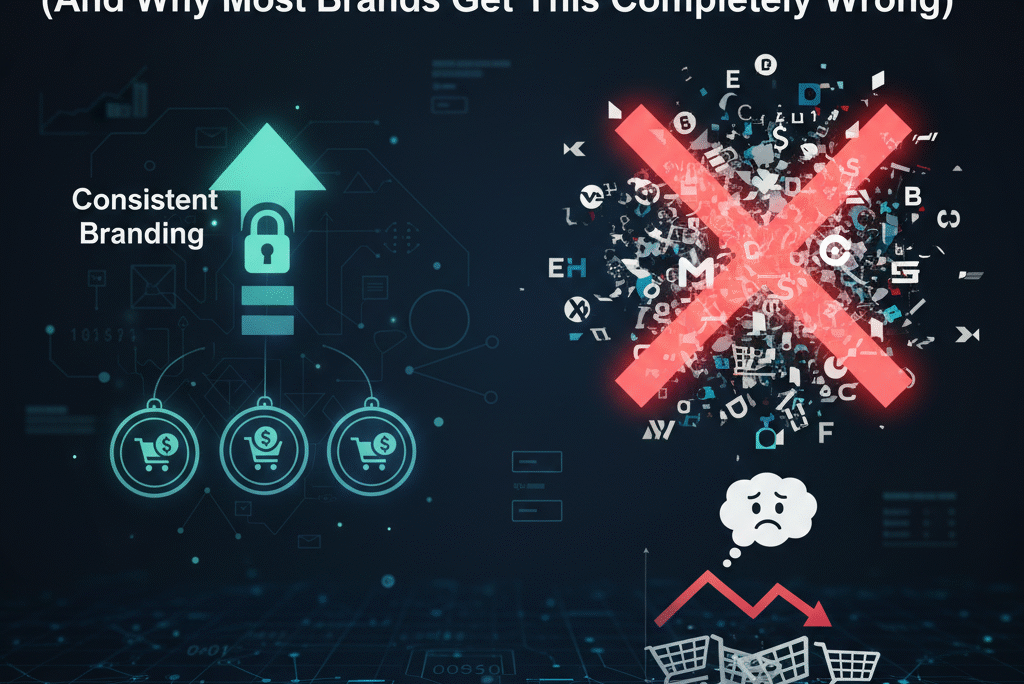
When these signals are inconsistent — when the website looks different from the packaging, the packaging looks different from the social media, the social media sounds different from the email newsletters — the customer can’t form a reliable model of the brand. Something feels off, even if the customer can’t articulate what it is. The dissonance is registered as risk: if the brand can’t maintain a consistent identity, can it maintain consistent product quality? If the visual presentation changes unexpectedly, what else might change?
For ecommerce businesses, this trust-through-consistency mechanism is not a nice-to-have — it’s the primary mechanism through which customer relationships are built and maintained. The brand is the relationship. Everything the customer knows about you comes through the brand signals you send, and those signals need to be consistent enough to build the predictive model that trust requires.
The Emotional Memory That Makes Customers Return
Repeat purchases are fundamentally driven by emotional memory rather than rational recollection. Understanding this distinction changes how branding investment should be evaluated and prioritized.
When a customer thinks about a brand they’ve bought from before, they don’t typically recall the product’s specifications or features in any detail. They recall how the brand made them feel. Was it premium? Friendly? Reliable? Effortless? Trustworthy? Those emotional impressions persist long after the specific details of the purchase have faded, and they’re the primary input into the decision about whether to buy again.
Consistent branding reinforces emotional memory by replaying the same emotional signals across every interaction. If the brand creates an impression of trustworthy reliability — through calm, professional visual design, consistent tonal quality in copy, packaging that communicates quality attention — every subsequent encounter with the brand reinforces that impression. The emotional memory becomes stronger and more reliable with repetition, which makes returning to the brand feel like the natural choice rather than a decision that needs to be made.
Inconsistent branding undermines emotional memory by creating contradictory signals. If the brand sometimes feels premium and sometimes feels cheap, sometimes sounds confident and sometimes sounds uncertain, the emotional impression that forms is muddled rather than clear. A muddled emotional impression doesn’t trigger the automatic positive response that drives repeat purchases — it triggers the kind of deliberate re-evaluation that consistent branding is supposed to make unnecessary.
There’s a specific threshold that consistent branding needs to cross for emotional memory to drive automatic return behavior rather than deliberate reconsideration. Before that threshold, each purchase still feels like a decision. After it, return purchases feel like defaults — the customer isn’t deciding to come back, they’re just acting on an established pattern. The brands that cross this threshold are the ones that appear in the “my brand” language — customers who refer to a brand as “my coffee” or “my moisturizer” or “my running shoes” have crossed this threshold. Getting there requires the kind of consistent, repeated emotional reinforcement that only consistent branding produces.
Recognition in Crowded Marketplaces: The Conversion Efficiency Argument
The relationship between brand recognition and conversion rate is one of the most direct and most measurable expressions of consistent branding’s commercial value, and it’s particularly significant for businesses operating in crowded marketplace environments like Amazon, eBay, or Etsy.
In these environments, a buyer’s first encounter with a purchase decision involves scrolling through dozens of competing listings simultaneously, making rapid assessments based primarily on thumbnail images. The cognitive load of evaluating even a fraction of the available options would be overwhelming if each evaluation required full attention. The brain’s response to this situation is to use recognition as a filtering mechanism: familiar things get considered, unfamiliar things get skipped.
For brands that have invested in consistent visual identity — consistent primary color, consistent logo treatment, consistent image composition style — the recognition mechanism works in their favor. A buyer who encountered the brand in a previous search session, or who bought from it previously, can recognize the brand instantly and direct their attention toward it without requiring the full evaluation process. This recognition effect persists even for buyers who didn’t purchase — a brand they’ve seen before feels safer than a brand they’re encountering for the first time, even if they can’t remember where they saw it.
For brands without consistent visual identity, every encounter is effectively a first encounter. There’s no recognition to leverage, no familiarity to convert into trust, no shortcut available to the buyer who might otherwise choose them. Every sale requires the full evaluation process, which is more cognitively demanding for the buyer and more competitively vulnerable for the seller because the evaluation includes all available alternatives simultaneously.
The practical implication is measurable in conversion rate terms. Consistent branding increases conversion rate not by making the listing more persuasive in isolation but by making it more recognizable relative to alternatives, which reduces the cognitive effort of selection and activates prior positive associations if they exist. Over time, as more buyers have positive experiences and the brand becomes more broadly recognizable in its category, this recognition dividend compounds into a structural conversion advantage that competitors without consistent branding can’t replicate.
What Inconsistency Actually Costs: The Hidden Retention Tax
Most businesses that have inconsistent branding don’t know it’s costing them repeat purchases. The signal is invisible — a customer who doesn’t return doesn’t send a message explaining why. They just don’t come back. And the brand typically interprets this as a product problem, a price problem, or a competition problem, none of which may be accurate.
The mechanism through which branding inconsistency kills repeat purchases is worth understanding in detail because it operates below the threshold of conscious awareness for most customers.
When a customer who had a positive first experience encounters the brand again — in a search result, in an email, in a social media post, in the packaging of a new order — and finds that the brand looks or sounds different from what they remember, a small but significant psychological event occurs. The brain attempts to match the current brand signal to the stored memory of the approved brand and finds a mismatch. That mismatch doesn’t necessarily register as a conscious concern — the customer isn’t typically thinking “this brand looks different from before.” It registers as a vague sense that something is unfamiliar, slightly off, less safe than it felt the first time.
This feeling doesn’t need to be strong to affect behavior. The threshold for “safe enough to rebuy without much thought” is much lower than the threshold for “concerning enough to cause active concern.” The customer simply finds the decision to rebuy slightly less automatic than it would have been if the brand had felt reliably familiar. That slight reduction in automaticity is enough, in a world with many alternatives and limited attention, to cause a meaningful proportion of potential repeat buyers to drift toward alternatives.
The cumulative cost of this drift over time is substantial. Customer acquisition cost is typically several times higher than customer retention cost. A business that consistently converts one-time buyers into repeat buyers through the trust and familiarity that consistent branding creates has a fundamentally more efficient customer economics than a business that needs to reacquire each customer from scratch because the branding never built the familiarity that would have made return automatic.
Why Discounts Don’t Solve the Retention Problem (And Often Make It Worse)
Many businesses respond to poor repeat purchase rates with discount strategies: loyalty discounts, reorder coupons, promotional pricing designed to incentivize return visits. These strategies produce short-term metrics improvement and long-term brand equity deterioration, and understanding why matters for anyone building a business intended to be profitable over a multi-year horizon.
When a customer returns primarily because of a discount, they’re not returning because of a positive brand relationship — they’re returning because a price signal was compelling enough to trigger the purchase. The psychological foundation of the return purchase is price rather than trust. This has two consequences that compound over time.
First, the customer who returns for a discount is training themselves to associate the brand with discounted pricing. They learn that waiting produces better prices, which means they become progressively less likely to pay full price. The business is effectively teaching its customer base not to value the brand at its actual price point, which is a systematic erosion of pricing power that accelerates as the discount strategy continues.
Second, the return purchase driven by discount doesn’t build the emotional memory and brand familiarity that would make future return purchases automatic. The customer has returned, but they haven’t deepened their relationship with the brand in the way that a return driven by genuine familiarity and trust would. The next return still requires the same promotional incentive, because the branding hasn’t done the work of making return feel natural and automatic.
Consistent branding solves the repeat purchase problem at its root rather than its symptom. Customers who return because they genuinely trust the brand, because it feels familiar and safe, because the emotional memory of their previous experience makes the brand feel like theirs — these customers return without promotional incentives. They pay full price because the brand has communicated that it’s worth full price. They’re more resistant to competitor offers because switching feels like abandoning something they’ve already decided to trust.
This is the mechanism through which brand equity translates into margin protection: customers who trust a brand don’t need to be incentivized to return, which means the business isn’t subsidizing its own repeat purchase rate with promotional spend that erodes the margin the pricing was designed to generate.
The Habit Formation That Makes Brands Irreplaceable
Beyond repeat purchases driven by familiarity and trust, there’s a more advanced stage of brand-customer relationship that consistent branding can produce over time: habit formation. Understanding the distinction between repeat purchase and habitual purchase is important because the two represent very different levels of customer value and very different levels of competitive protection.
A repeat purchase is a deliberate choice made again. The customer encountered a need, considered their options, remembered their positive experience with the brand, and chose it again. This is valuable — it means the brand has accumulated enough trust to win a deliberate choice. But the customer is still choosing each time, which means each purchase is technically a competitive opportunity for alternatives.
A habitual purchase is different. The customer encounters the need and automatically reaches for the same brand without a deliberate evaluation.
The psychology of habit formation explains precisely why this automatic behavior develops — repeated actions in consistent contexts gradually shift from deliberate choices to automatic responses, which is exactly the mechanism that consistent branding activates over time.
Coffee drinkers who buy the same brand every time without comparing alternatives. Supplement users who reorder before the current supply runs out without checking competitor pricing. Parents who buy the same brand of children’s product without being prompted. These customers aren’t deciding — they’re defaulting. And defaults are extraordinarily hard for competitors to disrupt.
Consistent branding is the primary mechanism through which repeat purchases evolve into habits. Each consistent interaction reinforces the brand’s place in the customer’s mental framework for the product category. Each time the brand looks, sounds, and feels the same way it always has, the habit loop strengthens. Over enough repetitions, the brand becomes the category default — the product the customer reaches for automatically rather than the product they select deliberately.
The timeline from first purchase to habitual purchase varies by product category and purchase frequency, but the direction is consistent: brands that maintain consistent identity across every customer interaction move through the stages of awareness, consideration, preference, loyalty, and habit faster than brands that create inconsistent impressions. The investment in consistency is what compresses the timeline.
What Consistent Branding Actually Means in Practice
Consistent branding is frequently misunderstood as a design rule about using the same logo and color palette everywhere. That’s the smallest part of what it means. The fuller definition encompasses every signal a customer receives from every interaction with the brand, across every channel and touchpoint, at every stage of the customer relationship.
Visual consistency is the most visible layer. Same primary colors, same typography treatment, same logo usage, same photography style, same compositional approach across product images, packaging, website, social media, and advertising. This visual consistency is what makes recognition possible at the thumbnail and shelf level, and what makes every encounter feel like an encounter with the same brand rather than with something unfamiliar.
Tonal consistency is the layer that most businesses neglect. If the website copy sounds confident and authoritative, the email newsletters should sound the same way. If the brand voice on social media is warm and approachable, the packaging copy should have the same quality. If there’s a significant tonal gap between how the brand sounds on one channel versus another, customers sense the inconsistency even when they can’t articulate it — the brand feels like different people are running different pieces of it, which reduces the impression of coherence and stability that trust requires.
Experiential consistency is the deepest layer. Does the packaging quality match the premium impression created by the listing photography? Does the product performance match the promise the copy made? Does the post-purchase experience — the emails, the packaging, the inserts — feel like a continuation of the brand impression that motivated the purchase, or does it feel like a different brand? Inconsistency at the experiential level is the most damaging kind because it betrays the trust that the visual and tonal consistency worked to build.
Promise consistency is the layer that determines long-term brand equity. Does the brand consistently deliver what it says it will deliver? Consistently over months, over years, across different product lines? The brands with the highest customer lifetime values are almost always the ones where the promise made by the branding is fulfilled reliably by the product experience. Branding that promises more than the product delivers creates initial purchase and then disappointment — the opposite of the repeat purchase cycle that consistent branding is supposed to produce.
The Specific Ways Brands Undermine Their Own Consistency
The patterns through which businesses inadvertently destroy the consistency they’re trying to build are predictable enough to catalog, and recognizing them is the first step toward avoiding them.
Redesigning too frequently is perhaps the most common self-inflicted consistency problem. Brands that refresh their visual identity every year or two because they’re tired of their current look are resetting the recognition capital they’ve accumulated with customers who’ve seen the previous identity. What feels like evolution from inside the brand feels like instability from outside it. Customers who recognized the brand in its previous form encounter the new identity as unfamiliar — the recognition shortcut breaks and trust capital is reset.
Outsourcing to multiple vendors without a coherent brand system produces the inconsistency that comes from multiple people making independent design and copy decisions without shared guidelines. The packaging designer makes different choices from the social media manager who makes different choices from the email marketing contractor. Each piece is individually acceptable; together they communicate a brand without a coherent identity.
Chasing design trends that don’t fit the brand’s established identity introduces the kind of sudden tonal shift that customers register as instability. A brand that has spent two years communicating premium minimalism and then adopts a maximalist, playful aesthetic because it’s trending is not evolving — it’s abandoning the identity it spent two years building. Customers who associated the minimalist identity with quality and trust don’t automatically transfer those associations to the new aesthetic.
Treating different channels as separate strategies rather than as parts of a single brand system produces the channel-level inconsistency that’s most common in growing businesses. The marketing team runs social media with one set of aesthetic and tonal choices, the operations team designs packaging with another, and the founder writes website copy in a third voice. No single person is making decisions across all channels simultaneously, so no single coherent brand identity emerges.
Branding as a Long-Term Compounding Asset
The financial return from consistent branding doesn’t manifest immediately, which is why most businesses underinvest in it. The first sale doesn’t feel different with consistent branding than without it. The second might not either. The compounding effect of accumulated brand familiarity, emotional memory, and habitual purchase behavior takes time to become visible in the metrics.
But when it becomes visible, it changes the fundamental economics of the business. Customer acquisition cost decreases because existing customers return without needing to be reacquired. Conversion rate increases because recognition makes selection easier for buyers who’ve encountered the brand before. Pricing power improves because customers who trust a brand don’t need it to compete on price. Resistance to competitive pressure increases because customers with established brand habits don’t evaluate alternatives with the same openness as customers who haven’t developed brand preferences.
These effects compound. Each repeat purchase reinforces the brand relationship, which makes the next repeat purchase more likely. Each recognition event deepens familiarity, which lowers the cognitive barrier to the next purchase. Each positive emotional memory associated with the brand makes the brand feel more like “mine” to the customer, which increases the switching cost.
The brands with the highest customer lifetime values are almost universally the ones that have maintained consistent identities across the longest periods. This isn’t a coincidence — it’s the direct financial expression of the compounding that consistent branding produces. Each year of consistency adds to the capital accumulated in previous years rather than requiring a reset.
This is why established brands can charge significantly more for products that are functionally similar to cheaper alternatives. The price premium isn’t for the product — it’s for the predictability, familiarity, and trust that the brand’s consistency has accumulated over time. Customers pay that premium not because they’ve done a rational analysis and concluded the product is worth more, but because the brand has made buying feel safe in a way that the alternative hasn’t.
Frequently Asked Questions About Branding Consistency and Repeat Purchases
How long does it take for consistent branding to affect repeat purchase rates measurably?
The timeline depends on purchase frequency in the product category. For products with monthly or more frequent purchase cycles, the effect becomes measurable within six to twelve months of consistent branding investment. For products with quarterly or annual purchase cycles, the measurement window is longer, but the mechanism operates throughout regardless of whether it’s immediately visible in the data. The compounding begins with the first consistent interaction — the timeline to visible measurement is a function of purchase frequency, not of when the consistency starts working.
Is consistent branding more important for some product categories than others?
It’s universally important, but the specific mechanism varies by category. In high-frequency consumable categories — food, supplements, personal care — consistent branding drives the habit formation that makes purchasing automatic. In lower-frequency categories — electronics, clothing, home goods — consistent branding drives the trust accumulation that makes the brand the first consideration when a purchase need arises. Both mechanisms produce repeat purchases; they operate on different timescales.
How much visual variation is acceptable while still maintaining brand consistency?
The useful test is whether the core identity signals — primary color palette, typography treatment, tonal register — remain consistent across variations, even when format, composition, and specific content vary. A brand can create very different types of content across different platforms and still maintain consistency if the underlying visual and tonal identity is stable. The problem isn’t variation in format or content — it’s variation in the core identity signals that recognition depends on.
Does consistent branding matter for smaller ecommerce businesses or only for established brands?
It matters more for smaller brands, not less. Established brands have accumulated recognition capital over years that can absorb some inconsistency without significant damage. New and growing brands have no recognition capital — every customer interaction is one of only a few the customer has had with the brand, which means each one has an outsized influence on the impression being formed. Consistent branding in the early stages of a brand’s development is what accelerates the accumulation of the recognition capital that makes later growth more efficient.
What’s the most impactful place to start building brand consistency for an ecommerce business?
Product listing images and packaging are typically the highest-leverage starting points for ecommerce brands because they’re the touchpoints that most directly affect the purchase decision and the post-purchase experience. Visual consistency between listing images and received packaging is where the most common and most damaging inconsistency occurs — when the product looks one way in the listing and arrives in packaging that creates a different impression. Closing that gap produces immediate improvement in both post-purchase satisfaction and the brand impression that drives repeat purchase consideration.
Final Thought: Consistency Is the Strategy, Not a Component of It
Most businesses treat branding consistency as one element of a broader marketing strategy — something to be maintained when convenient but flexible when other priorities compete. The brands with the highest customer lifetime values treat it the opposite way: consistency is the strategy, and everything else is in service of maintaining it.
The reason is simple. Every other customer retention mechanism — loyalty programs, email marketing, retargeting advertising, promotional discounts — requires ongoing investment and produces diminishing returns as customers become accustomed to the incentive. Branding consistency produces compounding returns. Each consistent interaction adds to the recognition capital, emotional memory, and trust that makes the next interaction more efficient and the next purchase more automatic.
In a world where customer acquisition costs are rising, advertising platforms are more competitive than ever, and price competition is one algorithm change away from erasing whatever margin advantage a product has built, the most durable competitive advantage available to most businesses is the brand equity accumulated through consistent identity over time.
That equity doesn’t show up in a monthly report. It shows up in the customer who buys again without needing to be sold to, in the conversion rate that stays stable when category competition increases, in the pricing power that makes margin growth possible without volume growth, and in the customer who describes your product as theirs.
Building it requires consistency. Not perfection, not trend-chasing, not constant reinvention — just the sustained, disciplined commitment to showing up the same way every time.
That sameness is the strategy.
If you’re building an ecommerce brand and want to develop the kind of consistent brand identity that turns first-time buyers into returning customers, you can explore how we approach brand development at ecommate.co.uk.