Valentine’s Day sneaks up on Amazon sellers every year.
One minute it’s January, the next minute shoppers are panic-buying gifts with phrases like “arrives before Feb 14” burned into their retinas. For Amazon sellers, this isn’t just another holiday—it’s a short, intense buying window where visibility, presentation, and timing matter more than ever.
Amazon recently shared a set of seller-focused tips around driving more Valentine’s Day sales. On paper, they look simple. In practice, these are the exact areas where many listings quietly underperform.
Let’s break them down in a way that actually helps you sell more—not just “check boxes.”
Refresh Your Product Images with Seasonal Themes
Valentine’s Day is visual. Emotional. Impulsive.
If your product images still look like they did in November, you’re already behind.
Seasonal image refreshes don’t mean redesigning your entire listing. It means contextual relevance. Subtle Valentine’s cues—color accents, lifestyle shots, gift-oriented angles—can dramatically increase click-through rates.
Many experienced Amazon sellers rotate images throughout the year:
- New Year imagery in January
- Valentine’s visuals in early February
- Spring refresh shortly after
This keeps listings feeling alive, not stale. Buyers subconsciously read freshness as relevance.
A+ Content is especially powerful here. It allows you to:
- Tell a Valentine’s-focused product story
- Emphasize gifting benefits
- Frame your product emotionally, not just functionally
Seasonal imagery isn’t about hype. It’s about meeting the buyer where they already are mentally.
Group Products by Interest Inside Your Brand Store
When shoppers land on your Brand Store, they’re already interested. The question is whether you help them decide quickly—or make them think too hard.
Valentine’s Day shoppers don’t browse endlessly. They scan.
Curated collections like:
- “For the Romantic Partner”
- “For Last-Minute Gifts”
- “For Tech Lovers”
- “For Self-Care & Wellness”
remove friction. They guide decision-making instead of forcing shoppers to do mental gymnastics.
This also keeps buyers inside your brand ecosystem longer, which:
- Increases average order value
- Improves brand recall
- Reduces bounce rates
Think of your Brand Store as a guided experience, not a warehouse.
Create Gift Pack Bundles (Within Policy)
Valentine’s Day is tailor-made for bundles.
Shoppers want convenience. They want something that feels like a gift without requiring extra thought. Bundles solve this beautifully—when done correctly.
Effective Valentine’s bundles:
- Pair complementary products
- Offer a slight value incentive
- Feel intentional, not random
The key is compliance. Amazon’s bundling policies exist for a reason, and ignoring them can get listings suppressed fast.
When bundles are done right, they:
- Increase perceived value
- Differentiate your listing
- Reduce price-only competition
From the buyer’s perspective, bundles feel generous. From the seller’s perspective, they’re strategic.
Use Amazon Ads Strategically, Not Desperately
Throwing ad budget at Valentine’s Day without a plan is how sellers burn money fast.
Seasonal ads work best when they’re targeted and timely. The goal isn’t maximum impressions—it’s relevance at peak buying moments.
Strong Valentine’s ad strategy focuses on:
- Keywords tied to gifting intent
- Product categories that historically convert during holidays
- Listings that already have solid images and reviews
Ads amplify what already works. They don’t fix weak listings.
When aligned with seasonal visuals and Brand Store collections, ads feel natural instead of intrusive. That’s where ROI lives.
Think Beyond This for Valentine’s Day Sales
Here’s the part most Amazon sellers skip—and regret later.
Valentine’s Day shouldn’t be treated as a one-time spike. It’s data. Feedback. Insight.
Smart sellers use this period to:
- Identify which products convert best as gifts
- See which images perform better seasonally
- Test bundles and pricing strategies
- Gather review language that highlights gifting use-cases
That information becomes gold when planning next year.
While others are still celebrating February wins, experienced sellers are already laying groundwork for Valentine’s Day 2027—better images, stronger bundles, tighter messaging.
Seasonal success compounds when you think long-term.
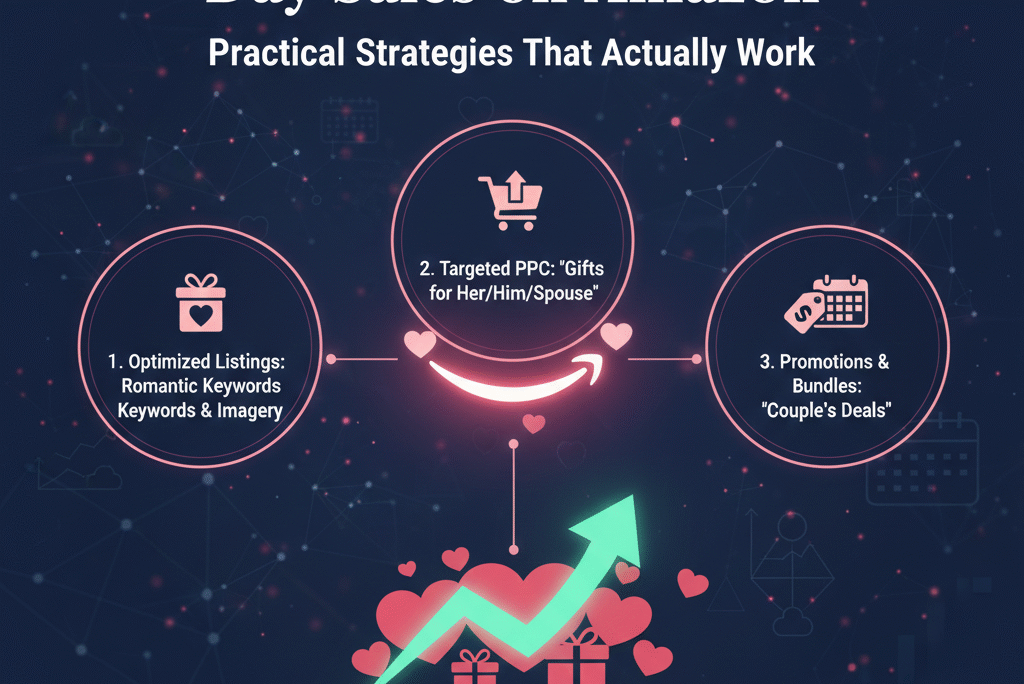
Why These Strategies Work Together
None of these tactics exist in isolation.
Seasonal images improve clicks.
Curated Brand Stores improve navigation.
Bundles increase value.
Ads amplify visibility.
Planning ahead compounds results.
When these pieces align, Valentine’s Day stops being chaotic and starts becoming predictable—in a good way.
That’s how seasonal selling turns from stress into structure.
Final Thoughts on Valentine’s Day Sales
Valentine’s Day isn’t about gimmicks. It’s about relevance, clarity, and emotional alignment with how people shop during that moment.
Amazon’s guidance points sellers in the right direction—but execution is what separates average listings from high-performing ones.
If your visuals feel current, your brand experience feels intentional, and your offers feel thoughtful, Valentine’s Day becomes less of a scramble and more of an opportunity you’re already prepared for.
Seasonal success isn’t magic.
It’s preparation, presented at the right moment.
And that’s a strategy worth repeating—every year.
Seasonal spikes like Valentine’s Day reward sellers who plan early, brand intentionally, and execute with clarity. If you want help turning seasonal opportunities into repeatable growth—from listing optimization and branding to ads and long-term Amazon strategy—visit our Amazon Private Label Services page to see how we help sellers build brands that scale beyond one holiday.
Amazon itself highlights that Valentine’s Day presents a high-intent buying window where small shifts in presentation and strategy really matter. In its seller guidance, Amazon recommends refreshing product images with seasonal themes, curating gift-focused product groupings inside Brand Stores, offering thoughtful bundles, and aligning your advertising with holiday shopping behavior to improve visibility and conversions. You can read the official Amazon seasonal selling tips here to see these recommendations straight from the source.