RUFUS AI is no longer in beta. It’s live, it’s reading your listings right now, and most sellers have no idea their Amazon SEO strategy is already behind.
Most Amazon sellers are still optimizing the way they did in 2023–2024.
They open tools like Helium 10, check keyword indexing, see green ticks, and assume their SEO is done.
But there’s a second layer now—and it’s quietly costing them sales they don’t even know they’re losing.
In 2026, Amazon’s AI assistant—Amazon Rufus—is fully rolled out across major marketplaces. And it’s not just helping buyers.
👉 It’s deciding which products get seen.
🧠 Where RUFUS AI Is Showing Up (And Why It Matters)
RUFUS AI isn’t some hidden backend system anymore. It’s visible—and influential.
You’ll find it:
- Inside the Amazon search experience
- On product pages as a buying assistant
- In suggestion panels answering buyer questions
And here’s the shift most sellers are missing:
👉 Buyers are no longer searching like this:
“water bottle”
👉 They’re searching like this:
“best leak-proof water bottle for gym bag”
That’s not keyword search.
That’s conversation.
And RUFUS is built for it.
🧩 How RUFUS AI Actually Works
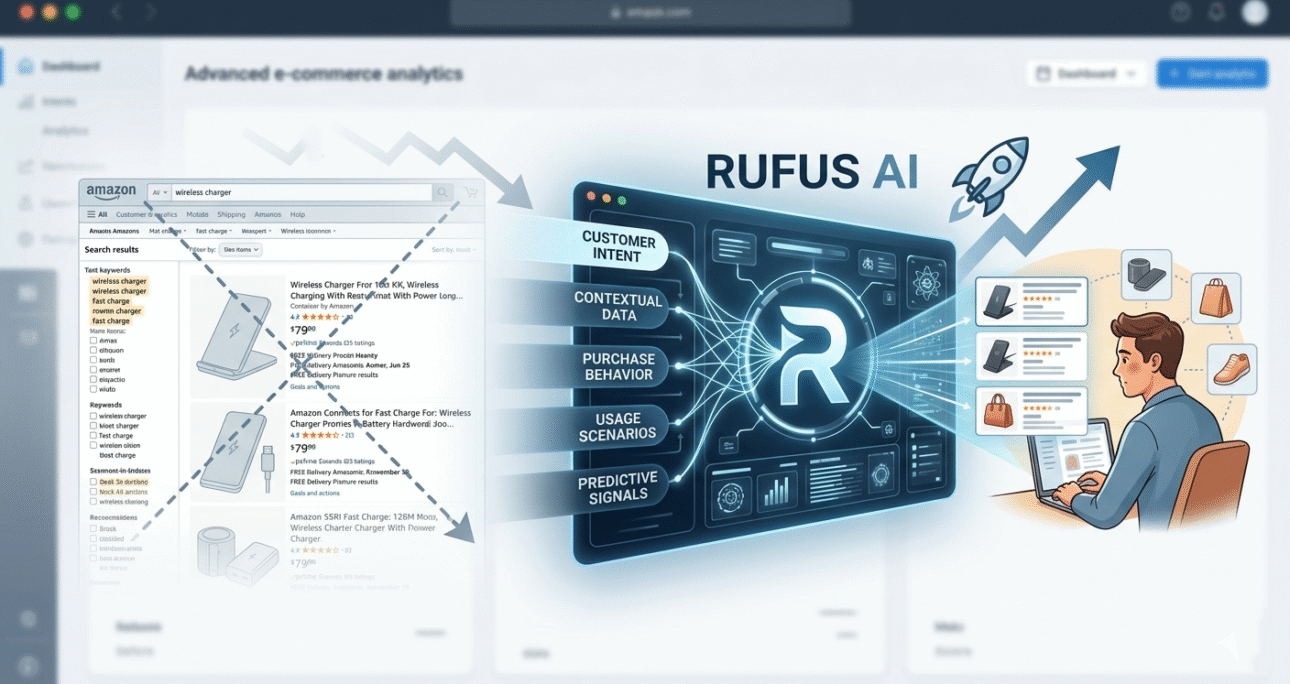
RUFUS AI is powered by a Large Language Model (LLM)—similar to how modern AI systems understand language and intent.
That means:
👉 It doesn’t just match keywords
👉 It understands meaning
🔍 It Reads Your Entire Listing as One Unit
Unlike traditional Amazon SEO, RUFUS doesn’t isolate fields.
It processes:
- Title
- Bullet points
- Product description
- A+ Content
- Q&A section
- Customer reviews
All at once.
🎯 It Matches Buyer Intent to Listing Context
Here’s where things change completely.
If a buyer asks:
“Is this good for sensitive skin?”
And your listing never addresses skin type…
👉 Your product won’t surface
Even if you rank for the keyword.
💥 Simple Example
Buyer types:
“protein powder for women who work out at night”
Old Amazon:
👉 Show listings with “protein powder”
RUFUS:
👉 Looks for listings that mention:
- Women
- Night workouts
- Digestion / sleep compatibility
If your listing doesn’t reflect that context?
👉 You’re invisible.
✍️ How to Write a RUFUS-Optimized Listing
This is where most sellers either adapt—or disappear.
🏷️ Title: Add Context, Not Just Keywords
Old:
Leak-Proof Water Bottle 32oz
RUFUS-optimized:
Leak-Proof Water Bottle 32oz — Ideal for Gym, Travel and Hiking
👉 Why it works:
You’re giving use-case signals, not just keywords.
📌 Bullet Points: Shift to Scenario-Based Writing
RUFUS matches situations, not specs.
Old:
Made with BPA-free materials
Better:
Safe for daily use — BPA-free construction, ideal for kids, athletes, and health-conscious adults
👉 You’re answering:
“Who is this for?”
📄 Product Description / A+ Content: Answer Questions Directly
Think like a buyer.
Write like this:
- “Is this safe for sensitive skin?”
- “Will this fit in a gym bag?”
- “Can I use this daily?”
👉 Then answer them inside your content.
Pro tip:
Use FAQ-style sections inside A+ Content
❓ Q&A Section: Your Most Underrated Weapon
Almost no one is using this properly.
RUFUS reads it heavily.
You should:
- Add 6–10 questions
- Cover use cases, concerns, comparisons
- Write detailed, natural answers
Example:
Q: Is this suitable for sensitive skin?
A: Yes, this product is formulated without harsh chemicals and is safe for sensitive skin types…
👉 That’s gold for RUFUS.
🔑 Backend Search Terms: Think in Phrases
Stop dumping keywords like:
❌ “water bottle gym leakproof BPA free”
Start using:
✅ “fits standard gym bag”
✅ “safe for toddlers”
✅ “for sensitive skin users”
👉 Natural language = better context matching
⚠️ The Mistake Most Sellers Are Making
Here’s the disconnect:
👉 Indexed = Amazon knows your product exists
👉 RUFUS-visible = Amazon believes your product is the best answer
These are not the same thing.
A product can be:
- Fully indexed
- Ranking for keywords
…and still be:
👉 Completely invisible to RUFUS
Why?
Because the listing lacks contextual depth
💣 Why Keyword-Only SEO Is Now Outdated
Sellers who:
- Keyword-stuff titles
- Spam backend terms
- Ignore listing depth
Are optimizing for a system that is no longer in control.
Amazon has shifted toward:
👉 AI-assisted decision making
And RUFUS is at the center of it.
✅ What To Do This Week (Action Plan)
If you do nothing else—do this.
1. Read Your Listing Like a Buyer
Ask:
👉 Does this answer the top 5 questions before purchase?
If not—you’re losing visibility.
2. Fix Your Q&A Section TODAY
If you have fewer than 5 questions:
👉 Add them yourself
Cover:
- Use cases
- Compatibility
- Concerns
- Comparisons
3. Rewrite 2 Bullet Points
Use this structure:
👉 “Perfect for [specific person or situation]”
4. Upgrade Backend Search Terms
Add:
- Natural phrases
- Buyer language
- Real-world use cases
5. Mine Your Reviews for Language
Look at how customers describe your product.
Then:
👉 Mirror that language in your listing
🧠 The Bigger Shift: Amazon Has Changed
Amazon is no longer just a search engine.
It’s becoming a decision engine.
And AI is controlling that layer.
🚀 Final Thoughts
Amazon has moved into an AI-assisted shopping experience—and in 2026, it’s fully here.
The listings that win now:
- Answer questions
- Address real use cases
- Speak the buyer’s language
Not just:
- Match keywords
Sellers still running a 2023 SEO playbook?
👉 They’re leaving sales on the table every single day.
🎯 Want to See If Your Listing Is RUFUS-Ready?
If you’re not sure how your listings perform under AI-driven search…
👉 Get a free RUFUS readiness audit.
We’ll break down:
- What your listing is missing
- Where you’re losing visibility
- How to fix it fast
Explore our services at Ecom Mate and start building listings that actually convert in 2026.
Amazon itself has confirmed that Rufus is designed to help customers make faster, more informed buying decisions by answering detailed product questions and surfacing the most relevant listings based on context—not just keywords. According to Amazon, Rufus uses generative AI to analyze product information, customer reviews, and real-time shopping queries to guide users toward the best-fit products. This shift signals a major change in how visibility works on the platform, moving beyond traditional keyword-based ranking systems.