
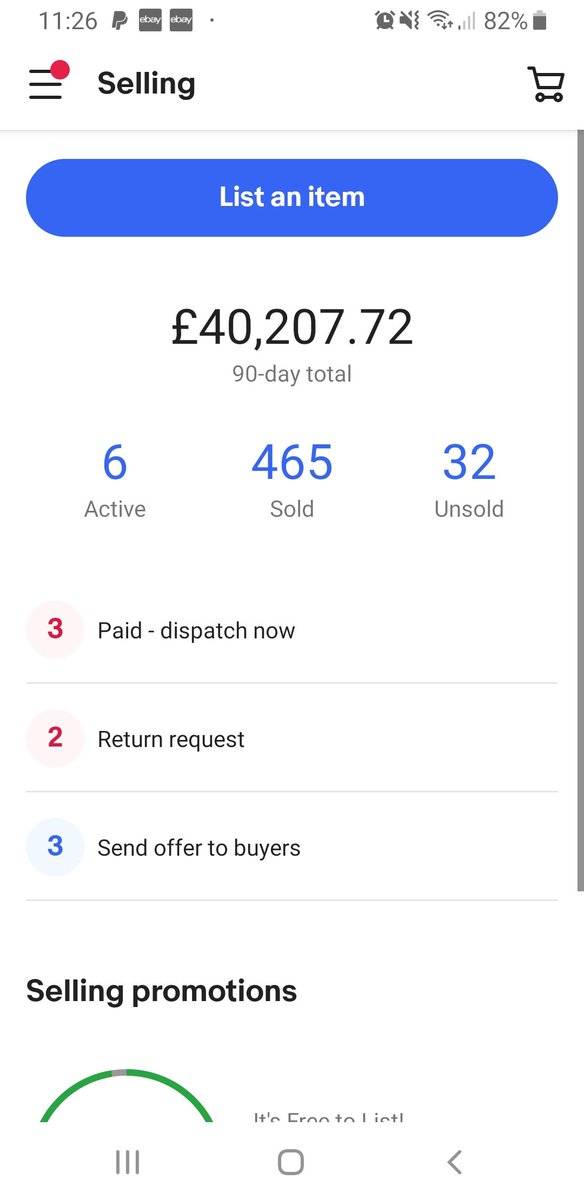
A UK eBay seller operating with a highly concentrated product selection — just 6 active listings — and limited tolerance for dead stock. The business model required:
High sell-through
Strong buyer intent
Tight control over operations and returns
The objective was not scale through volume, but scale through precision.
The store faced a non-obvious but serious constraint:
With only 6 active listings, every listing had to perform
Poor pricing, weak titles, or slow buyer response would immediately stall revenue
eturns and dispatch speed directly impacted seller health
Any unsold inventory tied up cash flow
The challenge was to maximize revenue per SKU while protecting account metrics — without expanding the catalog prematurely.
Listing-Level Revenue Engineering: Instead of adding SKUs, we optimized each listing as a revenue asset:
Titles rewritten for buyer-intent keywords, not just search volume.
Item specifics fully filled to dominate filtered searches.
Pricing positioned slightly below psychological resistance points to win Buy Box-style visibility in eBay results.
This ensured maximum exposure per listing.
Sell-Through First Inventory Control: Rather than pushing quantity, we focused on inventory velocity:
Prioritized SKUs with faster sell-through.
Allowed slow-moving items to expire instead of force-discounting.
Maintained a lean active catalog to keep sell-through rate high.
This reduced dead stock and preserved margin.
Buyer Engagement as a Conversion Lever: Used “Send Offer to Buyers” as an active conversion tool, not a passive feature:
Timed offers based on listing watch behavior.
Adjusted offer depth dynamically to protect margin.
Converted watchers into buyers without public price erosion.
This directly increased conversion without hurting perceived value.
Operational Discipline to Protect Ranking: Focused heavily on seller performance signals:
Same-day or next-day dispatch to maintain fast-handling status.
Tight return handling to prevent account health degradation.
Avoided aggressive scaling that could trigger service issues.
On eBay, operational signals directly affect visibility — this was non-negotiable.
Controlled Expansion Readiness: Instead of scaling blindly, we:
Used sell-through and conversion data to identify which SKUs deserved expansion.
Avoided adding listings until existing ones hit efficiency benchmarks.
Treated each new listing as a calculated investment, not a gamble
| Metric | Before | After |
|---|---|---|
| Revenue Generated | – | £40,207+ |
| Revenue Per Listing | – | £6,700+ |
| Units Sold | – | 465 |
| Average Monthly Revenue | – | £13,400+ |
| Inventory Efficiency | – | High Sell-Through |
We always thought scaling meant adding more products.
This process showed us that fixing how listings convert, how buyers are engaged, and how inventory is managed can outperform having dozens of SKUs. The store feels controlled, predictable, and ready for smart expansion.
If your eBay store is selling but feels inefficient, cluttered, or unpredictable, we’ll help you build a lean system that scales without burning cash.